Dead Hours, Live Margins: How to Turn Your Bar's Slowest Daypart Into Its Most Profitable
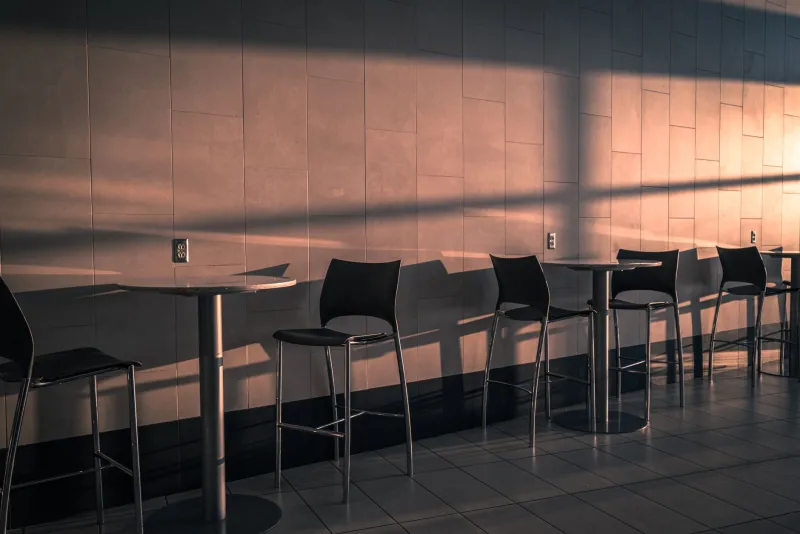
There is a particular kind of quiet that settles into a bar around 3 o'clock in the afternoon. The lunch crowd has cleared. The evening regulars are still at their desks. Two barstools are occupied. The bartender is restocking citrus. And the overhead — rent, utilities, insurance, the labor clock ticking on that one employee — continues accumulating against almost nothing.
For many independent bar owners, this window is treated as an unfortunate but unavoidable feature of the schedule. You open early because the license requires it, or because the lease demands it, or simply out of habit. The slow hours are filed away as the cost of being open.
That framing is costing you money.
The 2-to-5 PM stretch, the post-midnight shoulder before last call, the mid-week morning window — these are not dead weight. In many cases, they are the highest-margin hours you are not yet running. Understanding why, and doing something deliberate about it, is one of the more underutilized levers available to a small bar operator.
Why Shoulder Hours Outperform on Margin (When Managed Correctly)
Peak service periods generate volume. They also generate complexity, labor cost, comp pressure, breakage, and waste. A packed Friday night is profitable in aggregate, but the per-transaction margin is compressed by the demands of high-volume execution. You are running more staff, cycling through more product, absorbing more spillage, and often discounting more to keep the floor moving.
Shoulder hours invert that equation. Your fixed overhead is already committed — you are paying for the space regardless. Labor during a slow daypart is typically lean, often one or two staff members. Waste is lower. Comps are rarer. The customer who walks in at 3 PM is not competing for attention; they are receiving it.
If you can build even modest, consistent traffic into a previously dormant hour, the incremental revenue falls almost entirely to the bottom line. You are not adding overhead. You are filling space that was already costing you.
Identifying Which Hours Actually Have Potential
Not every slow period is recoverable. Before investing in programming or promotion, you need to assess which dormant dayparts have genuine demand infrastructure around them.
Start with your location's foot traffic patterns. If your bar sits in an office corridor, the 4-to-6 PM window has a natural constituency that the 2 PM window does not. If you are near a hospital, a university, or a shift-based employer, your slow hours may align precisely with someone else's shift change. Proximity to transit stops, gyms, or retail clusters each creates a different demand profile.
Next, look at your own transaction data. Most POS systems will show you hourly cover counts and average check size by time of day. You are looking for hours that have some activity — even five to ten transactions — but have never been deliberately cultivated. A window with zero transactions may indicate a structural barrier. A window with a handful of transactions and no programming behind it is your opportunity signal.
Finally, talk to the customers who already come during those hours. They are there for a reason. Understanding that reason — proximity, habit, the specific atmosphere of a quiet bar in the afternoon — tells you something about who else might follow them.
Architecting a Strategy That Doesn't Cannibalize Your Peak
The most common mistake operators make when attempting to build a shoulder daypart is inadvertently undermining their primary revenue window. Discounting too aggressively during slow hours trains customers to wait. Programming that bleeds into peak service disrupts your core operation.
The goal is differentiation, not competition with yourself.
Pricing architecture. Rather than blanket happy hour discounts, consider daypart-specific pricing on a curated subset of items. A limited afternoon menu — three or four cocktails, a focused food offering if your kitchen is running — with pricing that reflects the value of the hour without signaling that everything is cheaper at 3 PM. Some operators use a rotating feature item strategy: a single well-priced cocktail that changes weekly and is only available during the shoulder window. It creates discovery without broad discounting.
Programming with purpose. Afternoon and off-peak hours accommodate formats that peak service cannot. A weekly trivia session at 4 PM on a Tuesday, a rotating local vendor pop-up, a low-key live acoustic set on a Wednesday afternoon — these attract a specific demographic that is not competing with your Saturday night crowd. The key is consistency. A programming concept that runs every week at the same time builds habit. A one-off event builds nothing.
Partnerships that bring their own audience. Some of the most effective shoulder-hour strategies involve third-party collaboration. A neighboring coffee shop, bookstore, or fitness studio may have customers who would welcome a different kind of afternoon anchor. Cross-promotional arrangements — a discount card, a shared event, a co-branded afternoon series — can import foot traffic without requiring you to build it from scratch. These arrangements also carry minimal cost when structured correctly.
What Bars Have Actually Done With This
A neighborhood tavern in Nashville identified that its 3-to-5 PM window on weekdays was drawing a small but consistent group of remote workers who wanted ambient noise and a drink without the chaos of happy hour. Rather than ignoring them, the owner formalized the concept: a designated "work hour" section, reliable Wi-Fi posted prominently, a small afternoon menu with coffee service added to the bar program. Within three months, that window had tripled its average daily covers with no additional labor cost.
A craft beer bar in Portland recognized that its post-midnight window — the 11 PM to close stretch on weeknights — was hemorrhaging labor cost against almost no revenue. Instead of cutting hours, the owner introduced a rotating late-night tap takeover with a local brewery each month. The brewery promoted it to their own audience. The bar ran a single bartender and a limited draft list. The event generated a consistent draw of 30 to 50 guests on nights that had previously averaged eight.
Neither of these required significant capital investment. Both required attention, intention, and a willingness to treat a quiet hour as a canvas rather than a liability.
The Discipline of Not Overcomplicating It
Shoulder daypart strategy fails most often not from bad ideas but from overextension. Operators launch too many concurrent initiatives, staff them inadequately, and abandon them before the audience has time to form habits. The compounding value of a slow-hour program comes from repetition — the same thing, reliably, week after week, until it becomes part of the neighborhood's rhythm.
Choose one window. Identify one format. Run it consistently for sixty days before evaluating. Measure not just revenue but cover count, average check, and repeat visit rate within that specific window.
Your busiest hours will always deserve attention. But the hours you have been ignoring may be the ones with the most room left to grow.