Why Experienced Bartenders Walk Out the Door — And What Independent Owners Can Do Before They Do
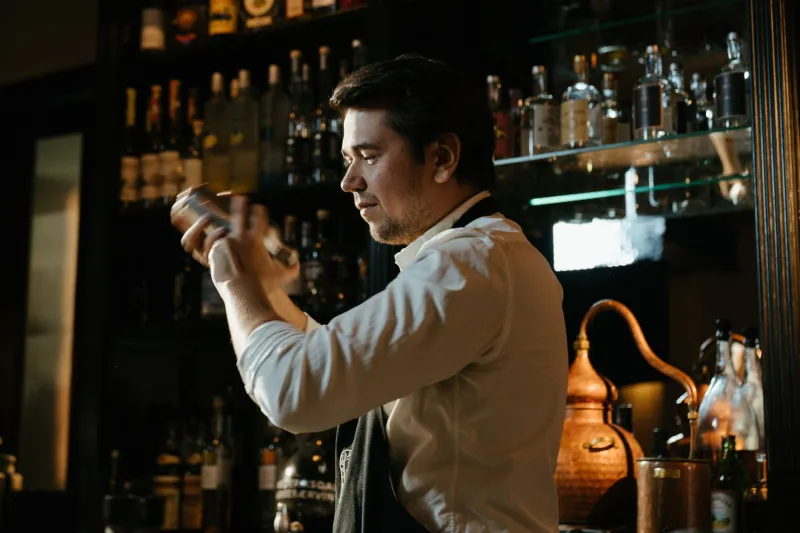
The departure of a strong bartender rarely announces itself in advance. One shift they are your most reliable closer, the person guests ask for by name, the staff member who trains new hires without being asked. Then they give two weeks' notice, and you are left reconstructing their institutional knowledge from scratch while managing a floor that suddenly feels short-staffed in ways that go far beyond headcount.
Independent bar owners tend to frame this as a loyalty problem. It is almost never that simple. The bartenders leaving your operation are, in most cases, responding rationally to economic signals — and those signals deserve a serious examination before you post another job listing.
The Economic Arithmetic That Works Against Independent Bars
The compensation reality for bartenders at independent bars is structurally complicated. Base wages in most US markets are set at or near the tipped minimum wage, which means total earnings are heavily dependent on tip volume. That dependency creates a ceiling that an independent bar often cannot raise unilaterally.
Consider what a bartender at a high-volume corporate chain location earns on a busy Friday night versus what the same shift looks like at your 60-seat neighborhood bar. The gap is not always enormous on a per-shift basis, but over the course of a year — factoring in slower weeknights, seasonal dips, and the unpredictability of independent scheduling — the cumulative difference becomes significant. Experienced bartenders run this math, even if informally.
Beyond base earnings, the benefits gap between independent operators and corporate employers has widened considerably. Health insurance, retirement contributions, paid time off, and structured advancement pathways are now standard offerings at many chain and hotel bar operations. Independent bars, working with tighter margins, have historically been unable to match these offerings. That gap was once tolerable when independent bars offered superior culture, creative latitude, and schedule flexibility. Increasingly, experienced bartenders are deciding the tradeoff no longer favors the independent side.
What Experienced Bartenders Are Actually Weighing
It is worth being precise about who is most at risk of leaving. Entry-level bartenders cycle through the industry regardless of where they work. The loss that genuinely damages an independent bar's operation is the mid-career bartender — typically someone with three to eight years of experience — who has built a guest following, understands your systems, and could step into a supervisory role if the opportunity existed.
These individuals are not leaving because they dislike the work. They are leaving because they have reached a point in their lives where the volatility of tipped income becomes harder to absorb. Rent increases, healthcare costs, and longer-term financial planning create pressure points that a good Saturday night no longer neutralizes. The career pivot to corporate hospitality, hotel bar management, or even an entirely different industry is, for many of them, a reluctant but rational decision.
Understanding this distinction matters because it changes how you approach the retention problem. You are not competing for someone who wants the highest possible wage at any cost. You are competing for someone who wants predictability, respect, and some form of forward trajectory — and who will accept a compensation tradeoff if the other elements are genuinely present.
Diagnosing Your Own Compensation Structure
Before assuming your compensation is uncompetitive, it is worth determining whether the problem is structural or communicative. These are meaningfully different problems with different solutions.
A structural compensation problem exists when your total payout — wages plus tips plus any non-monetary benefits — falls below what a comparable role in your market offers at a corporate or hotel bar. This is diagnosable. Talk to your departing staff honestly. Review what comparable operations in your city are advertising. If the gap is real, no amount of culture-building will fully compensate for it, and you need to examine whether your pricing and volume model can support higher base wages or whether other structural changes are necessary.
A communicative compensation problem is different. This occurs when your actual compensation package is reasonably competitive but your staff does not perceive it that way — because you have never articulated it clearly. Independent bar owners frequently underestimate the value of intangible benefits: flexible scheduling that accommodates side work or education, genuine creative input on the menu, direct access to ownership, and a work environment that does not involve the bureaucratic friction of a corporate structure. These are real benefits. If you are not naming them explicitly and reinforcing their value, your staff cannot weigh them against competing offers.
Non-Monetary Retention Levers That Independent Bars Can Realistically Pull
If raising wages is constrained by margin reality, the retention conversation must shift toward what independent bars can credibly offer that corporate operations cannot. Several of these levers are underutilized.
Defined advancement pathways. One of the most consistent complaints from experienced bartenders at independent bars is the absence of any structured progression. Creating a clearly defined path from bartender to lead bartender to bar manager — with documented responsibilities and corresponding compensation at each stage — signals that the role has a future. Even if advancement is slow, the existence of the pathway matters.
Equity in scheduling. Unpredictable or inequitable scheduling is a silent retention killer. Experienced staff who have earned priority scheduling through performance and tenure should receive it consistently. When perceived favoritism governs shift assignments, your strongest employees begin evaluating their options.
Investment in professional development. Covering the cost of a spirits certification, a bar industry conference registration, or a structured tasting education program costs relatively little in absolute terms but communicates a level of investment in the individual that corporate operations rarely replicate at the individual bartender level. The signal matters as much as the dollar amount.
Transparent financial conversations. Many independent bar owners are reluctant to share operational realities with their staff. This reluctance often backfires. A bartender who understands why a raise is not currently possible — because you have walked them through the margin math honestly — is far more likely to remain patient than one who assumes the limitation reflects indifference. Transparency, used carefully, is a retention tool.
The Cost of Getting This Wrong
The financial cost of losing an experienced bartender is routinely underestimated. Recruiting, onboarding, and training a replacement requires time and money. The period between departure and full replacement productivity typically spans several months, during which service quality and guest experience absorb the impact. For a bartender with an established guest following, some portion of that following may reduce their visit frequency or shift their loyalty elsewhere during the transition.
None of this is to suggest that retention is possible in every case. Some departures reflect life circumstances entirely outside your control. But a meaningful share of the bartender exits that independent bar owners experience are preventable — not through generosity alone, but through diagnosis, communication, and a willingness to treat compensation as a strategic variable rather than a fixed cost.
The operators who retain experienced staff over the long term tend to share a common characteristic: they treat the employment relationship as one that requires active maintenance, not passive assumption. In an industry where talent is genuinely scarce and genuinely consequential, that orientation is not optional — it is operational.