You Are Not Losing to the Bar Down the Street
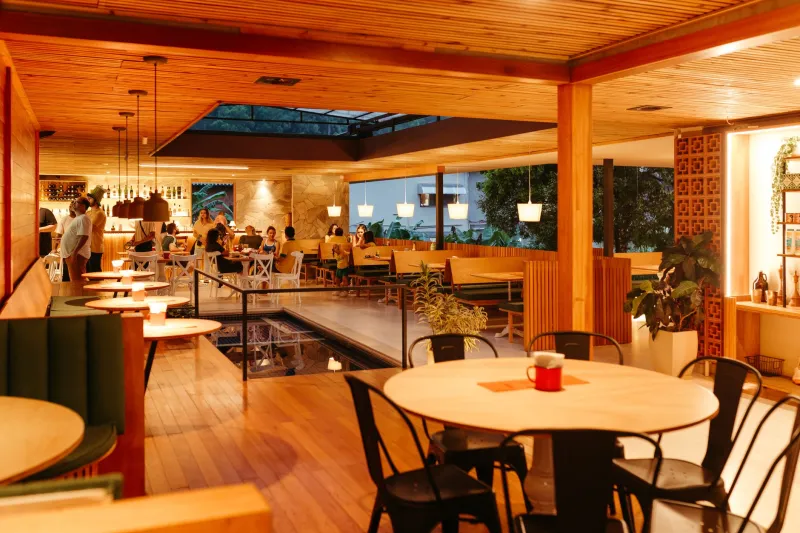
Most independent bar owners spend considerable energy monitoring what the competition down the block is doing — their specials, their staffing, their décor updates. That surveillance, however well-intentioned, is almost entirely misdirected. The forces pulling your customers away on a Tuesday night are not other bars; they are gyms, streaming platforms, coffee shops, and a dozen other venues competing for the same finite resource: your customer's discretionary time.
This is not a minor semantic distinction. It is a strategic error with direct consequences for how you price, program, and position your bar in the marketplace. Until you correctly identify who you are actually competing against, every operational adjustment you make is calibrated against the wrong target.
The Illusion of Bar-to-Bar Competition
The instinct to benchmark against other bars is understandable. They occupy the same physical neighborhood. They sell alcohol. They pursue the same Friday night crowd. On the surface, the competitive framing seems logical.
But consider what your customers are actually weighing when they decide how to spend a Wednesday evening. They are not choosing between your bar and the one three blocks over. They are choosing between your bar and staying home to watch a new series on a streaming platform. They are choosing between your bar and the cycling studio that just opened downtown and now hosts social rides followed by beer. They are choosing between your bar and the specialty coffee shop that runs ticketed tasting events, cultivates a dedicated community, and has become the social anchor of the neighborhood — without serving a single drop of alcohol.
These alternatives do not appear in your competitive analysis because they are not bars. They should.
What "Third Place" Actually Means for Your Business
Urban sociologist Ray Oldenburg popularized the concept of the "third place" — the social environment that exists outside of home and work where community life is anchored. Bars have historically occupied this role with remarkable effectiveness. The neighborhood bar was, for generations, a reliable third place: accessible, informal, and woven into the fabric of daily life.
That monopoly no longer exists.
Today, third-place status is contested territory. Boutique fitness studios have built loyalty ecosystems that rival any bar's regulars program. Esports lounges and gaming bars have captured a demographic that once had limited social alternatives. Independent coffee shops, particularly those with evening hours and programming, have positioned themselves as sober-friendly community hubs with real staying power. Co-working spaces with social hours have further fragmented where people choose to spend their discretionary time.
Each of these venues is drawing from the same pool of hours and dollars that your bar depends on. The customer who used to stop in three times a week may now allocate two of those evenings to a fitness class and a post-workout social at a juice bar. You have not lost that customer to another bar. You have lost them to a fundamentally different category of competitor.
Diagnosing the Real Threat in Your Market
The first step toward addressing this challenge is conducting an honest audit of your local competitive landscape — one that extends well beyond licensed liquor establishments.
Walk your neighborhood and surrounding district with fresh eyes. Identify every venue that could credibly claim a portion of your customer's social budget and leisure time. This includes fitness studios with social programming, gaming lounges, wine bars and bottle shops with tasting events, specialty coffee shops with evening hours, live music venues, escape rooms, bowling alleys, axe-throwing facilities, and any community-oriented retail concept that has built a regular customer base.
For each venue, ask the same questions: Who is their core customer? What time of day and week do they draw the most traffic? What is the approximate spend per visit? What emotional need are they fulfilling?
You are not looking for venues to replicate. You are building a map of where your customers' time and money are already going — or could go — when they are not at your bar.
Positioning Your Bar as Irreplaceable
Once you understand the breadth of your competitive environment, the strategic question shifts from "how do we beat the bar down the street" to "why would someone choose us over everything else available to them tonight?"
This is a harder question to answer, and it demands a more honest internal assessment. What does your bar offer that a cycling studio's social hour does not? What does your bar offer that a well-programmed coffee shop cannot replicate? If your answer centers primarily on alcohol, you are building your differentiation on a product attribute that is increasingly available across a widening range of social venues.
The independent bars that are genuinely irreplaceable in their customers' weekly routines have typically achieved that status through one or more of the following:
A specific social identity. Your bar stands for something — a neighborhood, a subculture, a set of values — that creates genuine belonging for a defined group of people. This identity cannot be easily imitated by a fitness studio or a coffee shop because it is rooted in a community that has formed around your specific space.
Consistent, personalized hospitality. The small bar's structural advantage over larger venues is the ability to know customers by name, remember their preferences, and make them feel recognized. This is not a differentiator that a gaming lounge or a boutique gym can easily replicate at scale.
Programming that creates routine. Trivia nights, local music sets, themed tasting events, and community gatherings give customers a reason to return on a specific night at a specific time. Routine is the enemy of drift. When your bar is built into a customer's weekly schedule, it becomes significantly harder for a competing venue to displace.
A physical environment worth choosing. In an era when social options are abundant, environment matters more than it once did. Customers who have options will choose the space that feels right — comfortable, aesthetically considered, and conducive to the kind of social interaction they are seeking that evening.
A More Useful Competitive Posture
None of this suggests that other bars are irrelevant to your business. Direct competitors still matter, particularly when it comes to pricing, staffing, and neighborhood dynamics. But they should not consume the majority of your competitive attention.
The more productive posture is to spend less time watching what other bars are doing and more time understanding what your own customers are doing when they are not at your bar. Survey them directly. Study your traffic patterns. Identify the evenings when visits drop and investigate what else is happening in the neighborhood on those nights.
Your real competition is not the establishment with a liquor license a few blocks away. It is every credible alternative your customers have for spending their time and money on any given evening. Until your strategy accounts for that reality, you are managing your bar with an incomplete picture of the environment it actually operates in.


